Solar inverters: energy efficient for every need
Learn how solar inverters work, what types there are, and what factors you should consider to choose a suitable solution for your home or business in the Dominican Republic.
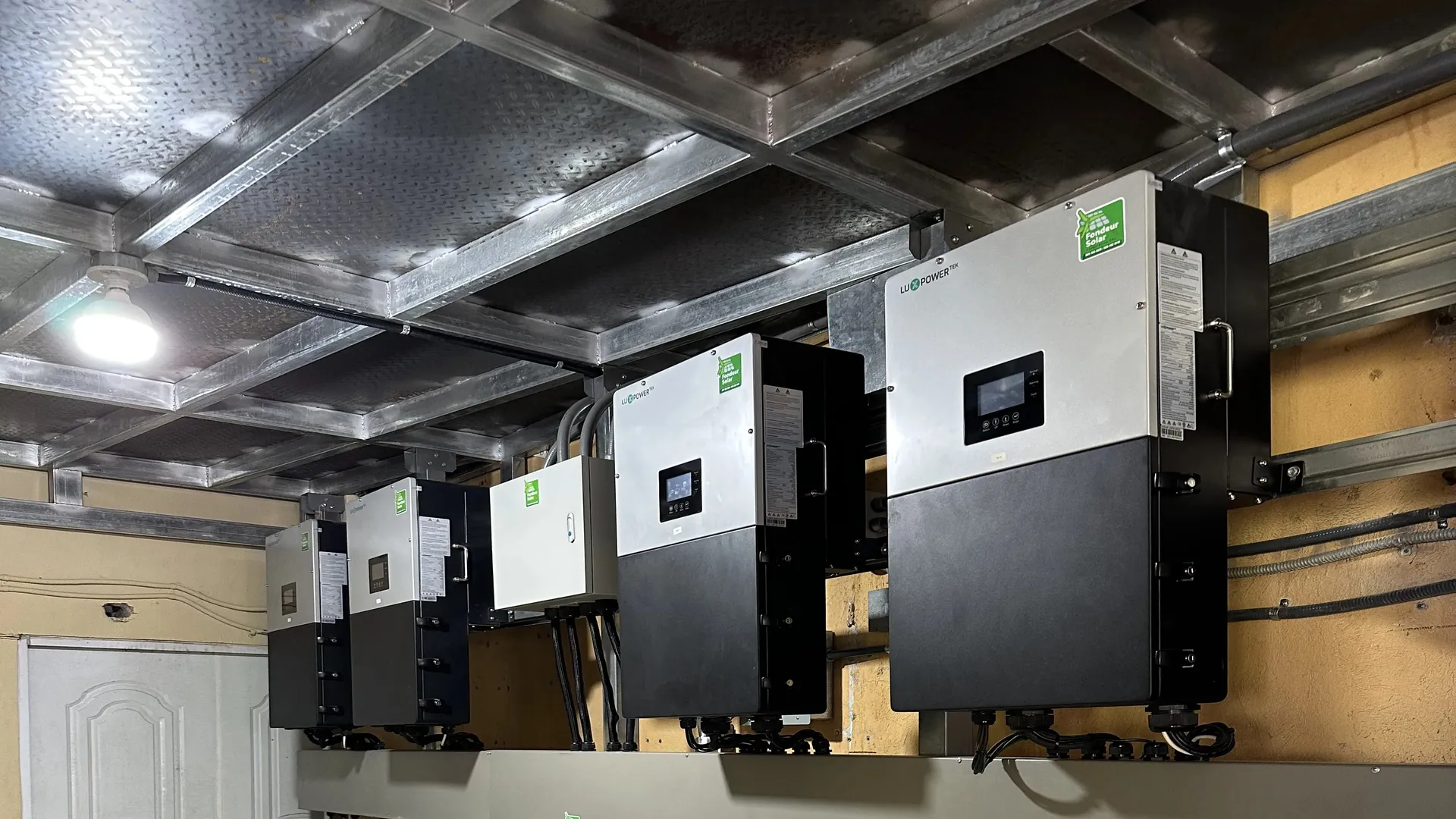
Solar inverters are a fundamental part of any photovoltaic system and mainly consist of transforming the direct current produced by solar panels into alternating current that can be used by the electrical equipment of a home, business or company.
However, modern inverters can do much more than convert energy. Depending on the technology selected, they can also manage batteries, interact with the power grid, and manage different energy sources to make better use of solar generation.
What is a solar inverter?
A solar inverter is the equipment responsible for converting the electricity generated by solar panels into energy compatible with conventional electrical installations.
In simple terms, panels produce electricity in a way that most electrical equipment doesn’t use directly. The inverter performs the conversion necessary for that energy to power lighting, air conditioning, appliances, commercial equipment, and other electrical loads.
For this reason, choosing the right inverter for solar panels is just as important as selecting the PV modules themselves.
How does a solar inverter work?
During daylight hours, photovoltaic panels generate direct current (DC). The inverter receives this electricity and transforms it into alternating current (AC), which is normally used inside homes and businesses.
Depending on the type of system, the inverter can also determine how the available energy is distributed. It can prioritize direct consumption from solar generation, manage battery charging and discharging, or work in conjunction with the power grid.
Current inverters also incorporate electronic control and monitoring systems that allow us to know variables such as generation, consumption and general behavior of the system.
Types of Solar Inverters
Not all photovoltaic systems work in the same way. There are different types of inverters and the selection depends mainly on energy needs, access to the electricity grid and whether the project includes battery storage.
On-grid inverters
On-grid inverters are designed for grid-connected systems. They allow the energy produced by solar panels to be used while the grid is available.
They are a frequent alternative for projects whose main objective is to take advantage of solar generation and reduce the amount of electricity consumed from the grid.
Off-grid inverters
An off-grid inverter is used in systems independent of the power grid. Generally, it works in conjunction with a battery bank where the energy produced by the solar panels is stored.
This type of configuration can be used in locations without reliable grid access or in projects designed to operate independently.
Hybrid inverters
Hybrid inverters integrate the generation of solar panels, battery storage and interaction with the electricity grid in the same system when the project configuration allows it.
A hybrid inverter can manage different energy sources and determine how to use them according to the established configuration. This flexibility makes them an especially interesting alternative when looking to combine solar use and energy backup.
Solar inverters and lithium batteries
Combining a storage-compatible inverter and lithium batteries for inverters allows you to conserve some of the available energy for later use.
In a properly designed system, solar energy can directly power loads while generation exists and allocate the available surplus to charge the batteries. When solar production decreases or the electricity supply is interrupted, the stored energy can be used to maintain the selected loads.
The backup capacity will depend on the size of the batteries, the power of the inverter, the electrical consumption and the general configuration of the system.
Which inverter do I need for my solar panels?
There is no ideal inverter for all projects. The selection must be made considering the particular characteristics of each installation.
Among the most important factors are the installed power in solar panels, electricity consumption, the loads to be powered, the need for backup, the capacity of the batteries and the possibilities for future expansion.
The electrical characteristics of the property and the compatibility between panels, inverter and storage system must also be considered.
Therefore, selecting an inverter solely for its power or price can lead to a system that does not adequately respond to the real needs of the user.
Benefits of selecting the right inverter
A solar system works as a whole. Panels, inverter, batteries, protections and other components must be compatible with each other to achieve the expected performance.
A proper selection of the inverter makes it possible to make better use of photovoltaic generation, efficiently manage the different energy sources and maintain a stable operation of the system.
It also makes it easier to design a facility that is ready to incorporate new energy needs in the future.
Inverter Installation in Dominican Republic
The conditions of each home or business are different. Therefore, an inverter installation must begin with the evaluation of the electricity consumption, the loads that need power and the objectives that are expected to be achieved with the solar system.
In the Dominican Republic, a project can be oriented towards savings through photovoltaic generation, energy backup or a combination of both objectives. This difference directly influences the choice between on-grid, off-grid or hybrid systems.
A professional installation must also consider electrical protections, equipment location, ventilation, wiring, configuration, and compatibility between all system components.
Solar Solutions for Homes and Businesses
Solar inverters can be part of solutions designed for homes, businesses, offices and other installations with different consumption profiles.
Each project must be sized according to its energy demand and objectives. This makes it possible to define the number of solar panels, the power of the inverter and, where storage is required, the appropriate capacity of the batteries.
The result is a solar solution designed around the real needs of each user, rather than adapting consumption to a generic system.
Find the right inverter for your project
Choosing between different solar inverters can seem complicated when there are different powers, technologies, and configurations.
An assessment of consumption and backup needs allows you to determine which solution is most suitable for each property.
Frequently asked questions about solar inverters
What is a solar inverter used for?
It converts the direct current produced by solar panels into alternating current usable by the electrical equipment of a home or business. Depending on the model, it can also manage batteries and different energy sources.
What is the difference between a regular and a hybrid inverter?
A hybrid inverter is designed to manage different energy sources and can integrate solar panels, batteries, and power grid within a single solution, depending on the system design.
Does a solar inverter need batteries?
Not necessarily. Grid-tied systems can operate without storage. Batteries are incorporated when the design requires energy storage or backup.
What size inverter do I need for my home?
It depends on consumption, electrical loads, the power of the panels, the equipment to be backed up and other technical parameters. That is why it must be sized for each installation.
Can I add lithium batteries later?
It will depend on the investor and the original design of the system. If there is the possibility of incorporating storage in the future, it is advisable to consider it from the equipment selection stage.
Which inverter is better: on grid, off grid or hybrid?
None is universally better. An on grid may be appropriate when the goal is to harness grid-connected solar energy; an off grid for standalone installations; and a hybrid when you want to combine different sources and storage.