Off-Grid Solar System
Find out how an Off-Grid solar system works, what autonomy it requires and how it is sized to operate without depending on the electricity grid.
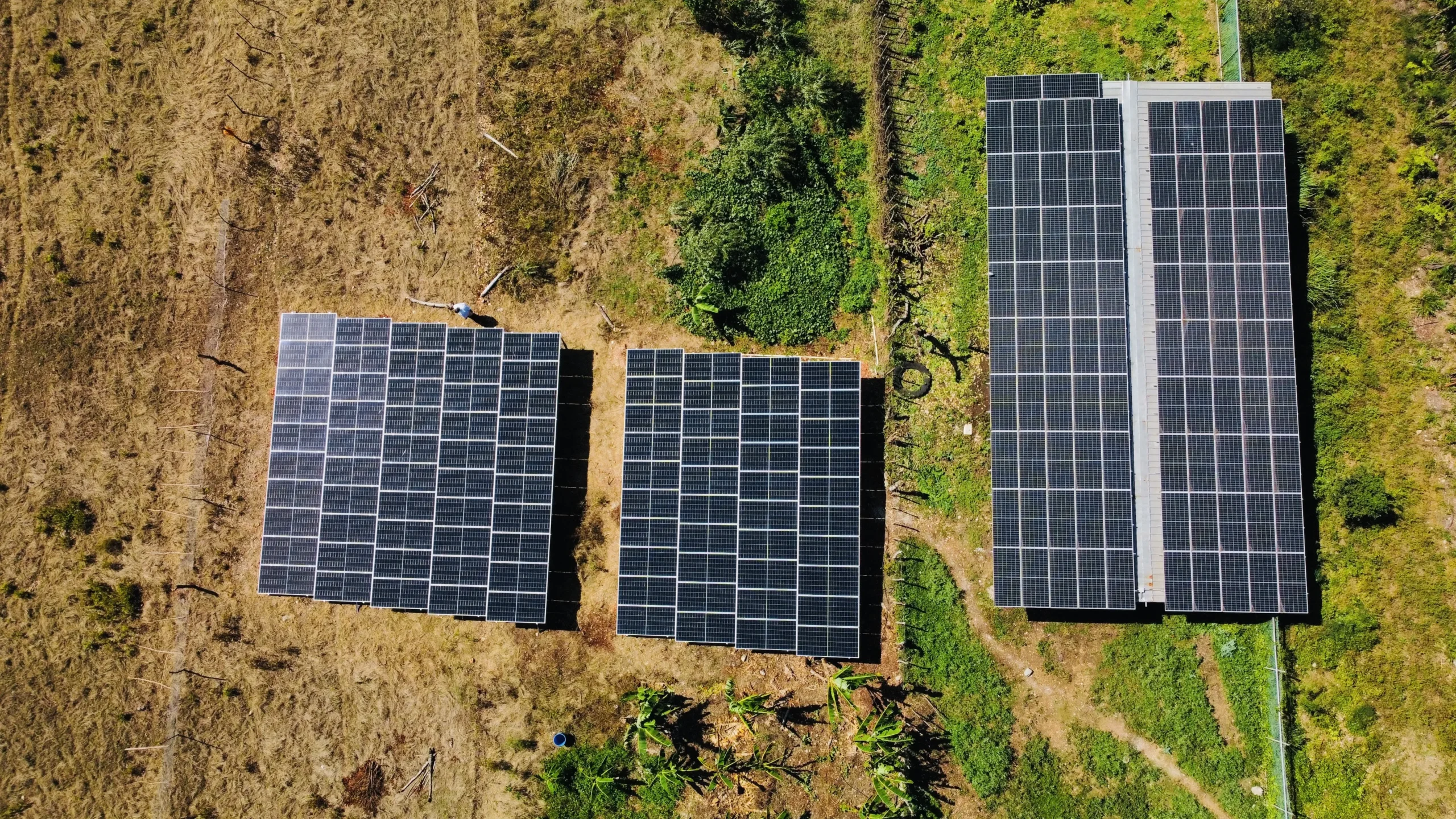
Also known as an off-grid solar system or off-grid photovoltaic system, an off-grid solar system is a photovoltaic installation designed to operate independently of the power grid. Unlike an on-grid system, where the grid can complement solar generation, this configuration is prepared to cover the energy needs of the installation by its own means.
This makes sizing a particularly important aspect, so it is not enough to determine how many solar panels fit in a property. It is necessary to study how much is consumed, at what times, what equipment should operate, what autonomy is required and what storage capacity will allow the installation to be kept operational when there is not enough solar generation.
What does it really mean to function without the power grid?
An Off-Grid system should not be understood simply as a conventional installation that has had the grid disconnected. When the grid does not exist as a backup, the solar system must assume full energy responsibility for the installation. This means that the design must consider situations such as:
- Overnight consumption;
- Periods of lower solar radiation;
- Days of greatest demand;
- Starting motors or other high-power loads;
- Recovery of batteries after periods of discharge;
- Future growth in consumption;
- Operating margin and system losses.
For this reason, the sizing of an isolated installation must be carried out with special care, since an insufficient system can run out of energy when demand exceeds the available capacity. On the other hand, an excessively oversized system can incorporate capacity that was not really needed.
Autonomy, one of the key points of an isolated system
In an On-Grid system, the grid can supply power when the panels do not produce enough electricity. In an Off-Grid system that option does not exist, so it must be established what level of autonomy the project actually needs.
A facility can be designed to cover different periods depending on its conditions and needs, and the greater the range required, the greater the storage capacity needed. But simply increasing the number of batteries doesn’t solve the problem either.
Photovoltaic generation must be able to produce enough energy to meet consumption and subsequently recover the storage used. That is why panels and batteries must be sized together.
Who can an Off-Grid system be suitable for?
An off-grid solar system can be particularly interesting when:
- There is no access to the electricity grid;
- Extending the network to the property is complicated;
- The facility is located in a remote location;
- A separate energy solution is needed;
- There is a consumption profile that can be correctly measured;
- Local energy production and storage is required.
It can also be evaluated in certain projects where there is a nearby network but the objective is to develop an independent installation.
However, if there is a stable electrical connection and the main purpose is to reduce grid consumption, it may be more convenient to consider an On-Grid configuration first. If there is a network and storage and backup are also needed, it may be more appropriate to evaluate a hybrid system.
How do you size an off-grid solar system?
Sizing starts with understanding consumption. You shouldn’t start by asking “How many panels do I want to install?”, but “What do I need to keep running and for how long?”
- Load inventory: A list of the equipment that will use energy must be drawn up and their power and estimated operating time must be known
- Daily consumption: From the loads and their hours of use, it is possible to estimate how much energy the installation needs each day.
- Maximum power: It should also be calculated how many devices could operate simultaneously, as this influences the required power of the inverter and the system.
- Nighttime consumption.
- Required autonomy: It must be determined how long you want to keep the installation running with the available energy.
- Battery capacity: Knowing consumption and autonomy, the required storage capacity can be calculated, incorporating the corresponding margins and operating conditions.
- PV capacity: The panels must produce enough energy to power loads during generation hours and recharge the storage used.
- Site Conditions: Space, orientation, shades, structure, equipment location, and other property characteristics should also be studied.