On-Grid Solar System Connected to the Grid
Find out how a grid-connected On-Grid solar system works, when to install it and what you need to consider to size it correctly.
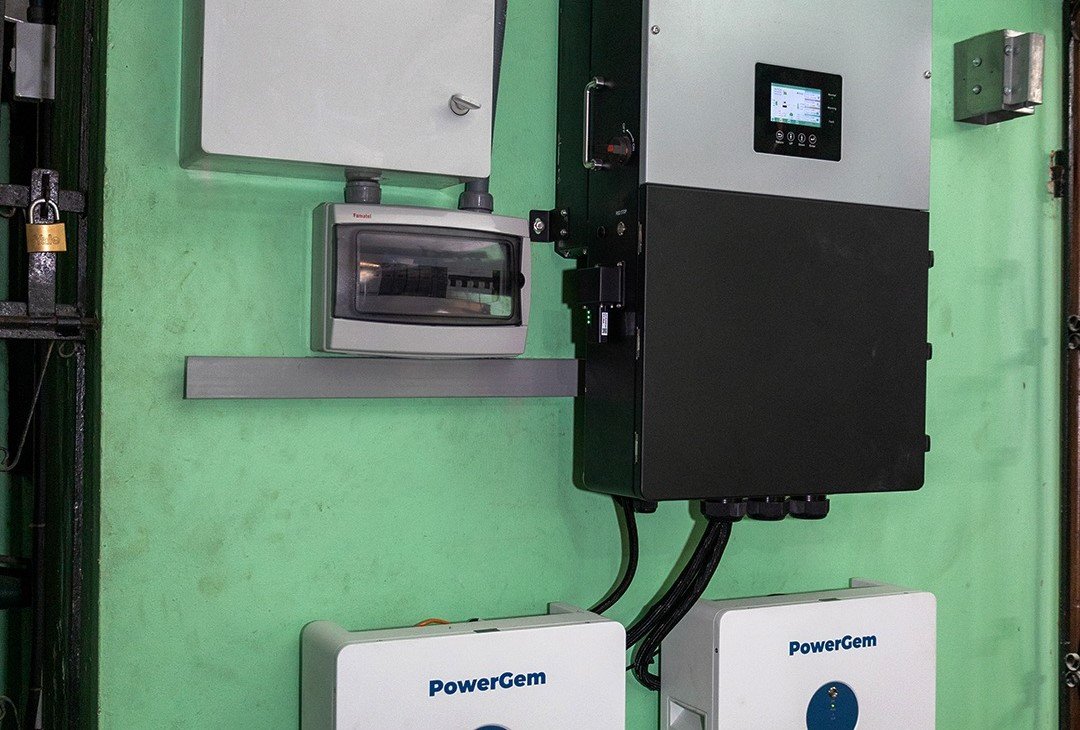
Also known as a grid-tied photovoltaic system, an On-Grid solar system is a photovoltaic installation designed to work in parallel with the power grid. This type of installation is usually used when the main goal is to reduce the amount of energy that needs to be taken from the power grid by taking advantage of available solar generation.
However, not all On-Grid projects need to have the same power or configuration. Electricity consumption, peak demand times, available panel space, and installation characteristics should be analyzed before sizing the system.
Does an On-Grid system need batteries?
One of the main characteristics of a conventional On-Grid configuration is precisely that it can operate without a battery bank. During the hours of solar generation, the system directly takes advantage of the energy produced by the panels and when that generation is not enough, it can use energy from the electricity grid.
This makes it possible to avoid mandatory storage in projects whose main objective is to harness solar energy to reduce consumption from the grid. However, if in addition to generating solar energy you want to have storage and backup during supply interruptions, it may be more appropriate to evaluate a hybrid solar system with batteries.
What happens to an On-Grid system when the electricity goes out?
This is one of the most important points to understand before choosing a configuration, as a conventional On-Grid system should not be considered an electrical backup system.
Even if there is solar radiation and the panels are capable of producing energy, grid-connected photovoltaic systems usually incorporate protection mechanisms that interrupt their operation when they detect a loss of the grid. This disconnection helps to prevent the installation from continuing to energize a grid that should be out of service.
Therefore, installing On-Grid solar panels does not necessarily mean that the property will have electricity during a power outage. When keeping certain loads running during power outages is part of the project’s objectives, a solution specifically designed to provide backup, such as a hybrid system with storage, should be evaluated.
Who can an On-Grid system be suitable for?
A grid-tied solar system can be especially interesting when:
- There is mains electricity supply on the property;
- The main objective is to reduce electricity consumption from the grid;
- There is significant consumption during the hours of solar generation;
- Energy storage is not necessarily needed;
- Blackout backup is not the primary objective of the project;
- There is adequate space to install the necessary photovoltaic capacity.
However, these conditions do not automatically mean that an On-Grid is the correct configuration. Every project requires a prior evaluation.
How do you size an On-Grid system?
There is not an adequate number of panels for all homes or companies, so the sizing must be based on real information about the installation. Among the factors that must be studied are:
- Electricity consumption: The consumption history allows you to establish a reference on the amount of energy used by the property.
- Consumption profile: Two properties can consume the same amount of energy per month and need different solutions.
- Available space: It is necessary to check what surface exists to install panels and what its characteristics are.
- Power of the installation: The system must be sized looking for an appropriate relationship between the photovoltaic capacity, the characteristics of the inverter and the energy performance of the property.
- Future possibilities: It may also be useful to consider whether consumption is expected to increase, new equipment is added or there is interest in adding energy storage later.
- Are you considering an On-Grid solar system?